Kwame Amankwah, MD
Kwame Amankwah, MD
2026 SVS Treasurer Candidate
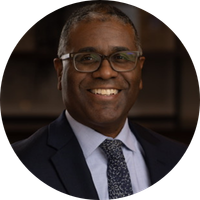
Kwame Amankwah, MD, is Chief of Vascular and Endovascular Surgery and Program Director of the vascular surgery residency at UConn Health. He also serves as Director of the Vascular Surgery Board and has been active in regional and national societies, including the New England Society for Vascular Surgery (NESVS) and the Eastern Vascular Society (EVS), working to advance education, collaboration and member engagement across the specialty.
Throughout his career, he has focused on listening to colleagues and trainees, supporting team development and aligning programs with the needs of the broader vascular community. He is grateful for the mentors and teams who have shaped his path and believes financial stewardship should reflect the values and diversity of SVS members. Outside of work, he enjoys family time, road biking and staying on the ice as a USA Hockey Level 4 coach and adult league player, which keep him grounded in teamwork and trust.
Service & Leadership
Service to the SVS
- 2023-2026: Chair, SVS VAM Video Committee
- 2023-2026: Member, Education Council for SVS
- 2023-2025: Section Lead, Cerebrovascular Section, Vascular Education and Self-Assessment Program
- 2023-2025: Member, Vascular Education and Self-Assessment Committee, SVS
- 2023-2024: Liaison, SVS Executive Board
- 2022-2023: Vice Chair, SVS VAM Video Committee
- 2021-2024: Member, SVS Post Graduate Education Committee
- 2020-2024: Member, SVS Diversity, Equity and Inclusion Committee
- 2017-2019: Member, SVS Document Oversight Committee
- 2010-2014: Member, SVS Resident & Student Outreach Committee
Service to Other Societies
- 2025-2031: Director, Vascular Surgery Board of the American Board of Surgery
- 2025-2026: Vice President, NESVS
- 2025: ISET Course Director
- 2024-Present: Co-Chair, Allied Health Committee, NESVS
- 2024-2025 Chair, Membership Committee, NESVS
- 2024-2025: Member, Executive Board NESVS
- 2013-2015: Chair, Eastern Vascular Society committee on Diversity and Women in Vascular Surgery
Strategic Vision for the Future of Vascular Surgery
Please briefly describe your strategic vision for the future for vascular surgery and the key role SVS must play to realize that vision.
The future of vascular surgery must center on a clear, unified identity as the indispensable specialists for complex vascular disease, with SVS as the convener, standards‑setter and chief advocate across education, quality and reimbursement. In a tightening political and financial environment, that vision must be matched by creative, disciplined funding strategies that support our members without compromising the Society’s long‑term financial strength.
SVS will need to continue to deliberately link its priorities in advocacy, education, practice, quality, research and branding to tangible actions that every member from students, allied health professionals, to senior surgeons can own. Including developing lower‑cost, high‑value educational formats, expanding virtual and regional offerings and building targeted scholarships or travel support for members across practice settings, ages, genders and ethnic backgrounds, guided by clear criteria and outcome metrics. At the same time, we must thoughtfully diversify revenue beyond traditional industry support and institutional travel funding through endowments, philanthropy and mission‑aligned partnerships that preserve independence.
As our workforce evolves across community and academic practice, vascular surgeons will increasingly work in multidisciplinary ecosystems. SVS continues to lead collaborative models while defining “right patient, right procedure, right setting” through VQI, verification and vascular‑specific performance measures. By aligning how we invest with who we are and whom we serve, we can protect members from undue economic burden, maintain robust participation in SVS activities and keep the Society financially stable while advancing our role as the gold‑standard for longitudinal vascular care.
Commitment to the Success of SVS
Please highlight key activities or initiatives that exemplify your commitment to the success of SVS.
In recent years, I have focused heavily on SVS education, serving on the Education Council, the Postgraduate Education Committee and the Vascular Education and Self‑Assessment Committee, while also leading the Cerebrovascular Section of VESAP. These roles have allowed me to help shape the curriculum that supports our trainees and practicing members and to align educational content with evolving standards of quality and board certification. As Chair (and previously Vice Chair) of the Vascular Annual Meeting Video Committee, I have worked to enhance how we present and disseminate educational content and assist the Society in reaching a broader and more diverse audience.
I have also tried to advance SVS’s values and membership strength through service on the Diversity, Equity and Inclusion Committee, the Resident & Student Outreach Committee, and as Co‑Chair of the Allied Health Committee. Regionally, my work as NESVS Membership Committee Chair, Executive Board member and Vice President has allowed me to further my engagement with community and academic surgeons alike. Earlier service on the SVS Document Oversight Committee and as Chair of the Eastern Vascular Society Committee on Diversity and Women in Vascular Surgery reflects a longstanding commitment to standards, transparency and inclusion.
Across these activities, my goal has been simple: participate and assist SVS’s educational offerings, broaden representation in our community and help to ensure that our programs remain relevant, accessible and mission‑driven.
Key Leadership Positions
Please highlight key leadership positions you hold or have held, and/or significant leadership achievements you have accomplished in vascular surgery or organized medicine and summarize how these have prepared you for the position of SVS Treasurer.
My preparation for the role of SVS Treasurer comes from years of service in roles where I have been trusted to steward programs, listen to colleagues and align limited resources with what matters most to patients and members.
As Chief of Vascular and Endovascular Surgery at the University of Connecticut and previously Chief of Interventional Radiology at the Syracuse VA, I have worked within health systems where decisions require evaluating quality, streamlining access and critical review of cost. Leading a multidisciplinary Thoracic Outlet Program taught me to build services carefully, justify resources and measure outcomes over time.
Within SVS and regional societies, I have been fortunate to serve in education, membership and DEI‑focused roles, including the Education Council, VESAP Cerebrovascular Section Lead, multiple postgraduate education committees, DEI Committee and as Chair of the Vascular Annual Meeting Video Committee. In NESVS, my work as Membership Committee Chair, Executive Board member and now Vice President has aided my understanding of member needs across practice settings.
Across these positions, my approach has been consistent: listen, seek broad input and then translate that input into practical, fair decisions. If given the opportunity to serve as Treasurer, I would bring that same humility, transparency and focus on aligning SVS’s financial choices with its mission and the needs of all members.
Commitment to Clinical and Academic Excellence in Vascular Surgery
Please highlight activities or initiatives that best exemplify your commitment to clinical and academic excellence in vascular surgery.
My commitment to clinical and academic excellence in vascular surgery is grounded in a sustained record of scholarship, trial participation, and education work that all aim to improve how we care for patients and train the next generation.
Clinically, my work spans complex aortic, carotid, venous and access surgery, reflected in case reports and series on challenging thoracic endovascular repairs, innominate and pelvic aneurysms, AV access outcomes and hybrid and endovascular solutions for limb‑ and life‑threatening disease. I have authored or co‑authored more than 40 peer‑reviewed publications across major journals in vascular surgery and related fields, including recent studies on trainee autonomy, gender differences in assessment and national engagement with diversity and inclusion in vascular training programs.
I have been fortunate to help lead multi‑institutional and collaborative work, including studies of autonomy and operative performance, adventitial cystic disease, sac behavior after EVAR and workforce and recruitment in cardiovascular specialties. These projects, together with multiple podium and poster presentations at SVS, EVS, SCVS, ACS and other meetings, reflect a consistent effort to translate clinical questions at the bedside into generalizable knowledge.
In parallel, my contributions to the ABS SCORE and VSCORE curricula authoring vascular modules, videos and numerous TWIS assessments demonstrate a long‑standing investment in standardized education for trainees. Together, these activities demonstrate my commitment to advancing evidence‑based vascular care, improving training environment and sharing practical knowledge.