Anil Hingorani, MD
Anil Hingorani, MD
2026 SVS Treasurer Candidate
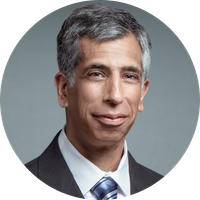
Anil Hingorani, MD is a board-certified vascular surgeon with more than 20 years of experience, practicing at the Vascular Institute of New York in Borough Park in Brooklyn. Dr. Hingorani is also a clinical professor at NYU Langone Brooklyn. In addition to his clinical practice, Dr. Hingorani serves as a Society for Vascular Surgery’s Highway to Health Campaign Ambassador, advancing education and awareness around vascular health.
Dr. Hingorani has a broad range of experience in diagnosing and treating vascular conditions, and his specialties include vascular access, varicose veins, lower limb arterial disease, carotid artery angioplasty and stent, aortic aneurysm and vein disorders.
Dr. Hingorani earned his Bachelor of Science in biology from Rensselaer Polytechnic Institute and his medical degree from Albany Medical College. He completed his surgical residency at St. Luke’s-Roosevelt Hospital Center of Columbia University and his vascular surgery fellowship at Maimonides Medical Center.
Service & Leadership
- 2005-2008: Member, Program Committee
- 2005-2007: Member, Endovascular Committee
- 2007-2013: Member, Diversity Committee
- 2010-2013: Chair, Diversity Committee
- 2008-2012: Member, Communication Committee
- 2007-present: Member, Mentoring Program
- 2009-2013: Ad Hoc Member, SVS Resident and Student Outreach Committee
- 2009-2012: Member, Post Graduate Education Committee
- 2009-2014: Member, Joint APMA/SVS Diabetic Foot Practice Guideline Committee
2013-2016: Chair, Joint APMA/SVS Diabetic Foot Practice Guideline Committee - 2010-2013: Member, Clinical Practice Council
- 2013-2016: Member, Leadership Committee
- 2016-2018: Member, Clinical Practice Council
- 2016-2019: Member, International Relations Committee
- 2017-2019: International Scholarship Mentor
- 2017-2019: Member, Program Committee
- 2017-2019: Member, Document Oversight Committee
- 2017-2019: Member, Certification Task Force
- 2020-present: Member, Population Health Task Force
- 2021-2022: Chair, Varicose Veins Guideline Writing Group
- 2021-present: Member, Governance Board of SVS/ACS Vascular Certification Board
- 2021-2024: Member, Communications Committee
- 2022-2024: Member, Community Practice Section
- 2022-2026: Chairperson, Section on Ambulatory Vascular Care
- 2022-present: SOOVC Representative to SVS Coding Committee
- 2023-present: Editor, SOOVC OBL Handbook
- 2023-2025: Member, Foundation Board of Directors
- 2023-present: Member, Digital Archive Task Force
- 2023-2024: Member, Website Subcommittee
- 2023-present: Member, Clinical Practice Council
- 2023-present: Representative to the ACS Board of Governors
- 2023-present: Representative to ACS Advisory Board
- 2024-present: Member, Audit Committee
- 2023-present: Member, Strategic Board of Directors
- 2024-present: Member, Vascular Center Home Improvement Activity Task Group
- 2024-present: Member, PAD Collaborative
- 2023-2025: Chair, SVS/ACS Outpatient Vascular Verification Program
- 2025-present: Member, Clinical Practice Council
- 2025-present: Member, Trauma Work Force
- 2025-present: Member, External Society Relations Committee Working Group
Strategic Vision for the Future of Vascular Surgery
Please briefly describe your strategic vision for the future for vascular surgery and the key role SVS must play to realize that vision.
The SVS is an amazing organization that is truly dedicated to vascular surgery at multiple levels. The strategic plan reflects this well. The most important issue for the SVS is communication to the membership. Despite social media, SVS Connect messages, the SVS Pulse, webinars, VAM and meetings throughout the year, the membership sometimes does not get the message. Some members and potential members still see the SVS as comprising of the academic elite. The SVS is perceived as being focused solely on arterial disease and not in touch with venous disease or dialysis access. I wonder if this is why the SVS only has a relatively small percentage who are engaged with the SVS committees, contribute to the PAC and are active at the regular in-person, virtual events and on the communication platforms. Some areas to potentially address these issues would be to diversify the communication platforms and the committees. By including more community practitioners in the entire SVS, we add new viewpoints. By adding young trainees and early career members to each committee, they bring their energy and the insight of the upcoming generations. I would propose that one of the most engaging methods of communicating to the membership is not using the present static tools, but regular short videos from the leadership delivering the messages.
I do feel that the SVS plays a key role with industry, the government and CMS, and I have an increasing appreciation of this recently while I attended the SVS Coding Committee calls. Having served on the SVS DOC and the SVS/ACS Vascular Certification Committee has allowed me to value the quality initiatives of the SVS. I have always been known to be a team player in my roles in various societies and feel that collaboration is the key to success.
Commitment to the Success of SVS
Please highlight key activities or initiatives that exemplify your commitment to the success of SVS.
I have learned about many of the different aspects of the SVS through serving on 20 SVS committees over the last 20+ years. I have served as the chair person of three SVS committees/workgroups. I have regularly posted on SVS Connects and social media through the SVS Ambassador program and serve as a mentor for our students through the SVS mentor-mentee program and the International Committee since at least 2016. Our medical center participates in the VQI, and I have been part of the SVS/ACS verification program since its inception in 2014. Our OBL has been certified by the SVS/ACS Vascular Certification Committee. I have been involved with the SVS podcasts and webinars and with joint projects with the SVS and collaborating societies. I have presented at various SVS PG courses.
Recently, I have served as the chair of the SAVC where we are ready to send out our update to the OBL Handbook to the medical editor. This is an online resource that is meant to be a live document and will be updated as needed. The purpose of this is to support our members who are interested in starting an OBL or maintaining an OBL. This is an increasingly important sector of vascular practice even in the academic sector. As the chair of the SAVC Research work group, I have helped set up our first SAVC presentation awards and the first seed grant awards that were presented at VAM23. This was to help support OBL research and present the great work that is being done in this space. I have served as treasurer on prior vascular societies and am familiar with aspects of this key role. I serve as the SAVC liaison to the SVS Coding Committee and continue to learn about this important but under appreciated feature of the SVS. Recently, the SAVC has been able to launch the SVS Group Purchasing Organization and the CMSS Age Friendly grant. These are meant to push vascular ambulatory care to the next level.
Key Leadership Positions
Please highlight key leadership positions you hold or have held, and/or significant leadership achievements you have accomplished in vascular surgery or organized medicine and summarize how these have prepared you for the position of SVS Treasurer.
My EVS presidency and time on the AVF Board of Directors (BoD) have allowed me to work with the SVS and examine its relationships from within the SVS and from the outside. My EVS presidency allowed me to learn that while you think you will make great changes in the society while you are president, it is likely that the journey to the presidency is more important. I think we made more of an impact at the EVS with the work that we did on one of the first Vascular Surgery Diversity Committees, which taught me the importance of DEI, how we were failing to serve our patients and our field and how we can do better. We took some of what we learned and tried to help set up Diversity committees across the regional vascular societies. I have been fortunate in seeing the SVS/EVS relationship grow and mature.
In the AVF, I have also seen the SVS/AVF relationship mature and grow and have been fortunate to help start the AVF DEI ad-hoc committee. On the AVF BoD, I have also been able to witness the SVS and the AVF work together on projects to better serve our members and patients. For example, the JVS-VL has become the premier venous journal worldwide. I am fortunate to presently serve as the associate editor for DEI for the JVS-VL.
Similarly, I have been fortunate to serve as: the chair person for our local AV Access meeting for over 10 years, the program director for our vascular fellowship, the vice-chair of our vascular division, the chair on the DFU guidelines from the SVS/APMA/SVM and other work groups for the SVS guidelines, the South Asian American Vascular Society president, chair of committees with VESS and SCVS and on the EC of the SCVS.
Commitment to Clinical and Academic Excellence in Vascular Surgery
Please highlight activities or initiatives that best exemplify your commitment to clinical and academic excellence in vascular surgery.
Although I enjoy doing arterial cases every week, I also do venous and dialysis access. Despite having been part of one of the busiest practices in NYC, I have over 200 PubMed citations. Although our output of publications does compete with the most productive academic institutions, we work in an OBL. We do not really represent just an academic group doing arterial cases but a hybrid. I would suggest that many our SVS members are actually a hybrid of many components of vascular surgery. Our practice is in NYC, but we routinely work with Latin American, European and Asian colleagues.
We closed our basic science lab in 2012 but continue to have many clinical projects with collaborators from around the world. I am in the process of starting another RCT for our office and work as a co-PI for an international RCT with industry. We have worked on national trials looking at angiogenesis, AAA, anti-platelet agents, lower extremity bypasses, PAD, hemostatic agents, venous insufficiency and arterial restenosis.
However, I would maintain our greatest accomplishment has been our trainees who have ended up all over the world in multiple fields and types of practice settings. They have been able to excel and continue to push the field forward. We have had mentees ranging from high school students to visiting clinicians who continue to do amazing work and have gone on to become leaders and presidents of various vascular organizations worldwide. In this respect, we are able to work across various borders and categories as a team.