A Circuitous Path to Vascular Surgery — And Finding Home
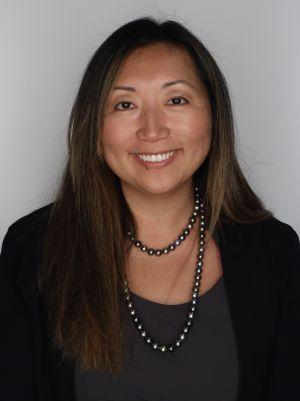
Not every surgeon begins as a pre-med student with a singular focus. For one vascular surgeon, the journey to medicine was anything but linear — and that may be exactly what makes Dr. Tahlia Weis so powerful.
She began her academic career at Knox College, a small liberal arts school in Galesburg, Illinois, majoring in chemistry while deeply immersed in studio art and art history. A semester abroad in Florence studying art and architecture further fueled her love of culture, craftsmanship and discovery. She graduated early and transitioned into Purdue University’s graduate chemistry program, where she completed a master’s degree developing Raman spectroscopy instrumentation to analyze art and archaeological artifacts.
Medicine entered her life quietly.
While in graduate school, she volunteered at a local hospital and earned her CNA certification, working in hospice and rehabilitation. She found herself drawn to wound care, often being the first to volunteer for dressing changes. When her unit closed, she transitioned to the emergency department as a technician, all while completing pre-med coursework.
Her research path shifted as well. Supported by a T32 grant, she joined a red blood cell membrane laboratory studying cytokine effects on sickle cells — work that deepened her understanding of physiology, pathology and the microscopic foundations of disease.
When she applied to medical school, her sights were set on plastic surgery and advancing wound therapies and technologies. She pursued research in plastics and burn surgery during her early years of training. But in the final weeks of her third year, while assembling dual applications to Plastic Surgery and Internal Medicine, she enrolled almost by happenstance in a two-week vascular surgery rotation.
Those two weeks changed everything.
Vascular surgery captured what had felt like diverging interests: complex medical patients requiring lifelong relationships; intricate operations demanding creativity and customized solutions; and the integration of imaging, interpretation and technical precision. It united science, artistry, innovation and human connection. Just as importantly, she found herself drawn to the people like the mentors and trainees who made the field feel like home.
Still, she worried she was too late. She had no vascular research experience, hadn’t attended vascular conferences and doubted whether she could secure strong letters of recommendation. She completed one away rotation while others did three. She applied only to integrated programs and matched at her top choice: the Medical University of South Carolina, a brand-new program.
Looking back, she sees striking parallels between vascular surgery and her early work in art conservation science. Both fields demand precision and creativity. Both require respect for complexity and context. Both blend innovation with tradition. And in both, she has found community.
“I am constantly surrounded by people who make it easy to love what I do,” she reflects.
The Power of Professional Community
Professional societies have played a defining role in her growth. A member of the Society for Vascular Surgery (SVS) since medical school, she has remained deeply engaged throughout her training and career. Serving on section committees, currently as the Vice Chair of the Women’s Section, has allowed her to cultivate meaningful relationships with mentors and mentees alike, refine her interests and expand her leadership skills.
Participation in the SVS Leadership Development Program (Cohort 3) further propelled her career in ways she hadn’t anticipated by opening doors, broadening her perspective and strengthening her voice within the specialty.
She believes medical societies have a responsibility not only to advance science but also to foster belonging, mentorship and opportunity in order to build a stronger, more inclusive profession for the next generation.
Honoring the Women Who Came Before — And Those Rising Now
Women’s History Month carries particular resonance in vascular surgery.
“We, as women vascular surgeons, unfortunately, exist on a very short timeline,” she notes. Yet in that short time, the growth has been immense and momentous.
For her, this month is about reflection and gratitude — honoring the women who came before, recognizing those who empower and uplift her now and celebrating the upward trajectory of women’s presence and influence in the field. It is both a celebration and a commitment to continue expanding opportunity, visibility and leadership for women in vascular surgery.
Investing in Voices That Matter
She also understands that progress requires support.
Programs like the SVS Foundation’s Voices of Vascular depend on member engagement and philanthropy. “Everything has a cost — whether it’s time or money,” she says. “A little can go a long way.”
Visibility matters. Representation matters. Storytelling matters. And sustained support ensures that the next generation of surgeons, especially women, can see themselves in the field and feel welcomed into it.
From analyzing Renaissance art in Florence to restoring blood flow in the operating room, her path may have been circuitous, but it was never accidental. Each chapter built upon the last, shaping a surgeon who brings creativity, curiosity and compassion to a specialty that thrives at the intersection of science and art.
And during Women’s History Month, her story stands as both reflection and inspiration — proof that there is no single path into surgery, only the courage to recognize when you’ve found where you belong.
When you donate to the SVS Foundation, you support Voices of Vascular and its mission to promote diversity, equity and inclusion. Learn more and make your gift today.
Tahlia L. Weis MD PhD is Senior Associate Consultant and Regional Chair of Vascular Surgery, Mayo Clinic Health System.